English| EUR
Suggested for you
More currencies
Choose a language
The journey from Zurich to Jungfraujoch requires three train connections and crosses five distinct rail networks over approximately four hours. No direct service exists—every route passes through Interlaken, then climbs via one of two mountain railway lines. Understanding the transfer sequence and morning departure windows determines how much time you spend at 3,454 meters.
Quick answer
Reaching Jungfraujoch from Zurich takes roughly four hours by train with two or three transfers depending on your chosen route. Depart Zurich Hauptbahnhof on an InterCity service to Interlaken Ost, transfer to a regional train toward Lauterbrunnen or Grindelwald, then board the Jungfrau Railway at Kleine Scheidegg for the final ascent. Trains run hourly from Zurich starting at 06:32, with the earliest arrival at Jungfraujoch around 10:30 if connections align.
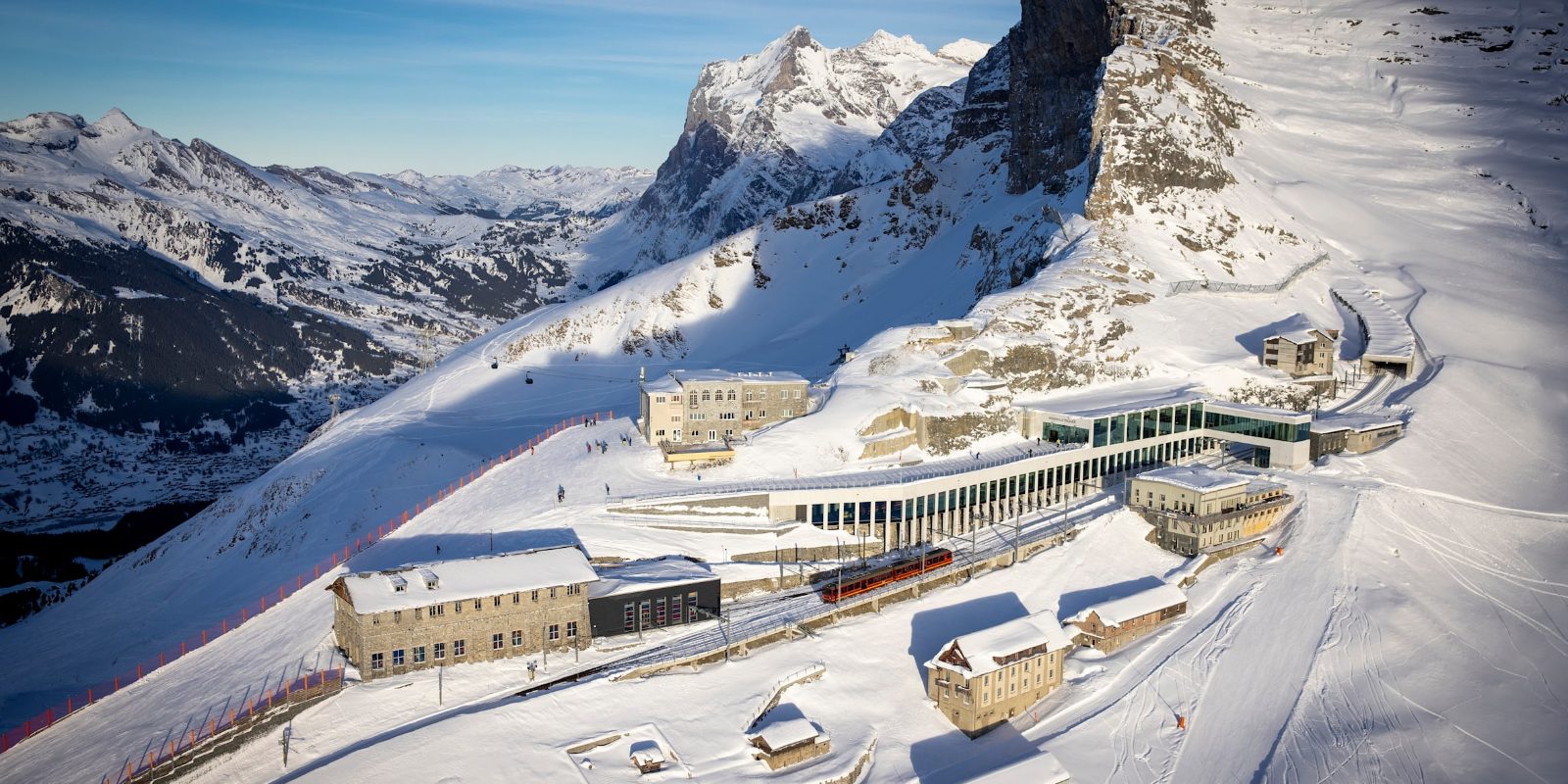
Every passenger climbing to the Top of Europe follows the same iron path: the Jungfrau Railway, a cogwheel line drilled through the Eiger's north face between 1896 and 1912. The route from Zurich channels through Switzerland's rail network in segments—intercity speed on the lowlands, regional services through the Bernese Oberland, and finally the dedicated mountain railway that grinds upward at grades exceeding 25 percent. No cable car or road alternative exists; the train is the only public access. How to get to Jungfraujoch from Zurich begins at Zurich Hauptbahnhof with an InterCity departure toward Interlaken Ost, a two-hour ride through the Swiss Mittelland. At Interlaken Ost, the route splits: the Lauterbrunnen line and the Grindelwald line both converge at Kleine Scheidegg, the mandatory transfer point for the Jungfrau Railway. Most travelers take the Lauterbrunnen route for its shorter connection time. The Grindelwald option adds ten minutes but offers broader valley views. Both lines meet at Kleine Scheidegg, where the cogwheel ascent begins. The Jungfrau Railway departs Kleine Scheidegg every thirty minutes during peak season, less frequently in winter. The final climb takes thirty-five minutes and includes two brief stops inside the Eiger tunnel—Eigerwand and Eismeer—where passengers can step onto viewing platforms carved into the rock. The railway reaches 3,454 meters, making it the highest station in Europe. Return journeys reverse the sequence, with the last descent from Jungfraujoch typically departing at 16:50 to align with valley connections. Timing matters: morning departures from Zurich between 06:32 and 08:02 deliver you to the summit before midday crowds. Weather on the plateau changes rapidly—clear morning skies can close by early afternoon, particularly in shoulder seasons. Reserve seats on intercity legs during summer weekends; the mountain railway does not accept reservations, and boarding is first-come during peak hours. The complete Zurich to Jungfraujoch journey consumes eight hours round-trip when accounting for summit time, making early starts non-negotiable for day visitors.
“The Jungfrau Railway is the only public access to the summit—no cable car or road alternative exists.”
Jungfraujoch is located in the Bernese Alps, accessible via a multi-stage rail journey originating from Zurich HB. Travelers typically route through Interlaken Ost before connecting to the final mountain rail segments.
Zurich HB to Interlaken Ost (InterCity)
Interlaken Ost to Lauterbrunnen or Grindelwald (Berner Oberland Bahn)
Lauterbrunnen to Kleine Scheidegg or Grindelwald to Eigergletscher (Wengernalpbahn)
Kleine Scheidegg or Eigergletscher to Jungfraujoch (Jungfraubahn)
The station at Jungfraujoch, 3801 Lauterbrunnen, Switzerland, is reached exclusively by rail; arrive between 08:00–10:00 to ensure sufficient time for outdoor attractions.
The cost of accessing the Jungfraujoch summit depends on your chosen route and the season of travel. Official pricing reflects a standard adult roundtrip fare.
Verdict: A standard adult roundtrip ticket is 205 CHF, though final costs vary depending on the specific route and seasonality.
Jungfraujoch maintains consistent operational hours throughout the week to facilitate travel planning for visitors.
The best arrival window is 08:00–10:00. Arriving during this period helps avoid peak crowds and ensures more time for outdoor attractions.
Warm, 5°C to 12°C at summit. Popular for hiking and clear visibility.
Cooler, 0°C to 8°C at summit. Stable weather conditions often occur.
Cold, -15°C to -5°C at summit. Expect snow and winter sport conditions.
—; Mid-week visits typically experience fewer visitors than weekends.
Verdict: The best time to visit is on a weekday during the shoulder months of May or September, arriving between 08:00 and 10:00.
This timeline suits travelers departing Zurich early and returning by evening, with approximately 10–11 hours round-trip including travel and mountain time.
Board the first direct train to Interlaken Ost; the journey takes roughly two hours through the Bernese Oberland.
Change to the narrow-gauge train toward Lauterbrunnen or Grindelwald; both routes converge at Kleine Scheidegg.
Reach the Top of Europe station at 3,454 meters; allocate 3–4 hours to explore the Ice Palace, Sphinx Observatory, and Alpine Sensation.
Catch the returning train via your chosen route; consider the alternate descent path for varied scenery.
Board the direct connection back to Zurich, arriving around 18:30.
A day trip from Zurich to Jungfraujoch requires advance planning for alpine conditions and long travel times.
Everything you need to know about how to get to jungfraujoch from zurich
To learn how to get to jungfraujoch from zurich, travelers typically take an intercity train to Interlaken Ost, followed by a connection to Grindelwald or Lauterbrunnen. From there, the Eiger Express tricable gondola or the rack railway completes the ascent to the summit. Please check the official rail schedules to coordinate your transfers efficiently.
Yes, many visitors choose an organized zurich to jungfraujoch tour to simplify the logistics of multiple train transfers. These services often manage the rail tickets and provide guidance throughout the journey, which is helpful when researching how to get to jungfraujoch from zurich for the first time.
The most reliable way to complete your zurich to jungfraujoch trip is via the Swiss Federal Railways (SBB) network. This route allows you to enjoy scenic alpine vistas while navigating the connection points at Interlaken and the mountain stations.
The travel time for those asking how to get to jungfraujoch from zurich is generally between three and four hours each way, depending on your specific connections. Factor in additional time for transfers and potential weather-related delays on the mountain sections.
The entrance fee of 205 CHF covers your access to the mountain attraction. Transportation costs via the Swiss rail system are generally purchased separately, so verify your specific ticket class before departure.
Yes, once you arrive at the station, you can access the Sphinx Observatory and the Ice Palace. These observation points are included in the visit to the Top of Europe, providing panoramic views of the Aletsch Glacier.